Starting Seeds Indoors
Starting Seeds Indoors
Starting seeds indoors is a rewarding way to get a jump on the growing season, save money, and grow varieties you may not find at local nurseries. With a simple setup and a few best practices, gardeners of all experience levels can successfully raise healthy seedlings at home.
Basic Seed-Starting Setup
You don’t need a fancy greenhouse to start seeds indoors. At a minimum, you’ll need:
- Containers – seed trays, pots, recycled containers, or DIY options
- Growing medium – a quality seed-starting mix or soil blocks
- Light – a bright window or grow lights
- Water – gentle and consistent moisture
- Warmth many seeds germinate best at 65-75°F
Avoid using regular garden soil indoors, as it’s often too dense and may contain pathogens. Seed-starting mixes are lightweight and designed to hold moisture while still draining well.
Seed-Starting Container Options
There are many ways to start seeds, depending on your space, budget, and gardening style:
- Traditional trays and cell packs
These are widely available and easy to use. They’re great for starting many seedlings at once and work well with humidity domes. - Soil blocking
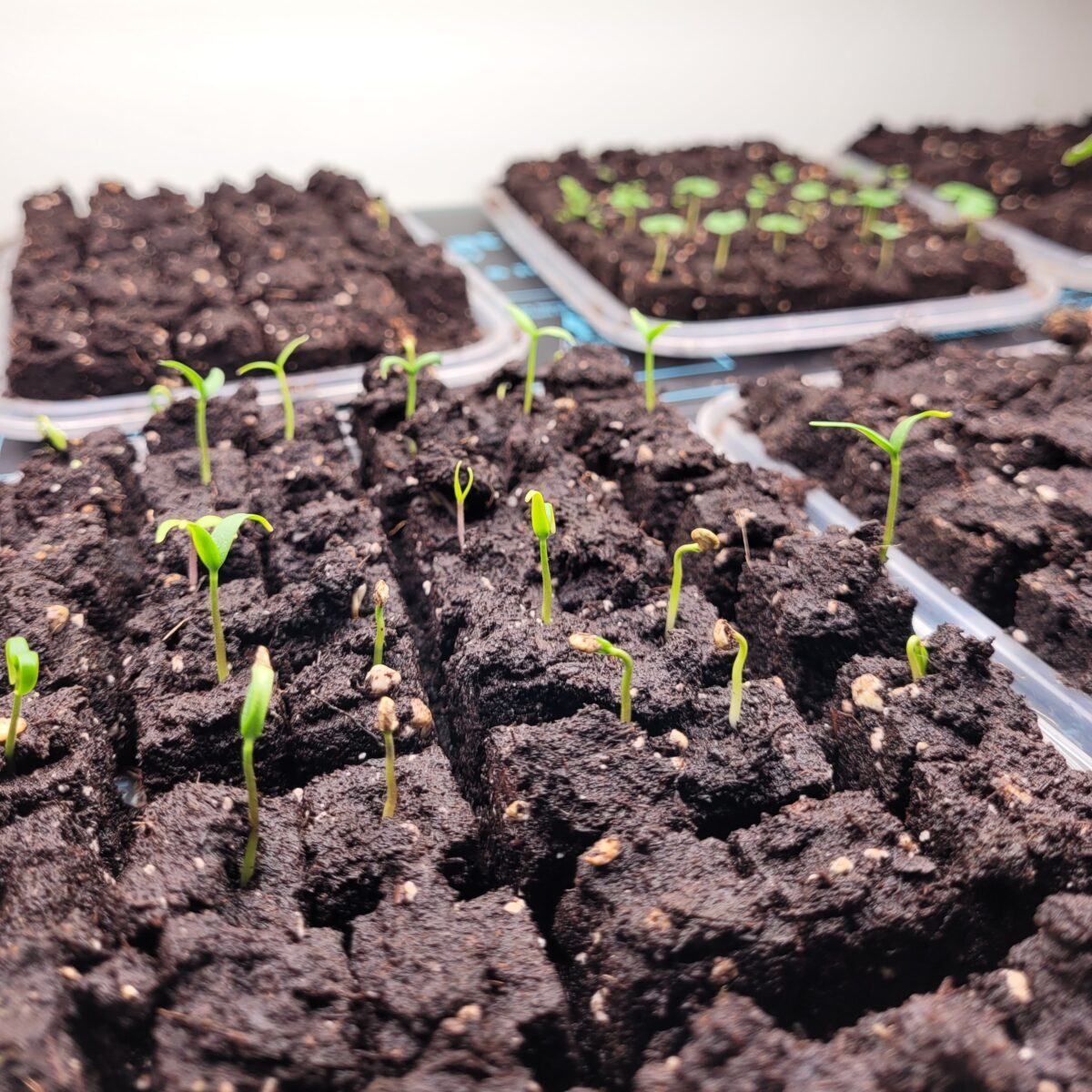
Soil blocking uses a special tool to compress moistened soil mix into free-standing cubes. Seeds are planted directly into the blocks, eliminating plastic containers. This method encourages strong root systems and makes transplanting easy. - Recycled and DIY containers
Toilet paper rolls make excellent biodegradable seed-starting pots, especially for plants that don’t like root disturbance (such as peas and beans). Simply stand the rolls upright in a tray, fill with soil, and plant your seeds. When it’s time to transplant, the whole roll can go into the ground. Other options include yogurt cups, egg cartons, or takeout containers. Just be sure to add drainage holes.
Light and Water: Two Keys to Success
Seedlings need much more light than most windows can provide. If possible, use grow lights positioned just a few inches above the plants and raise them as seedlings grow. Without enough light, seedlings become tall, thin, and weak.
Water gently to keep soil evenly moist, but not soggy. Bottom watering is best. Bottom water by placing containers in a tray of water and letting moisture soak up from below. This helps prevent damping-off disease and keeps seeds from washing away.
Best Practices for Healthy Seedlings
- Check seed packets for timing and planting depth
- Label everything; seedlings often look alike at first
- Provide airflow with a small fan to strengthen stems
- Harden off seedlings gradually before moving them outdoors